
In the book of Ruth, God made provisions for the vulnerable through simple instructions that we, even today, can take to heart.
Landowners were not to harvest everything. The edges were to be left so that widows, and the poor could gather what remained.
After purchasing a piece of remote land to be cleared, the usual plan was simple–brush and small wood would be piled and burned. It had no market value. It was considered debris.
But in the village here, many, if not most, families still cook over wood fires. Fuel is not convenient. It is carried – often by women – in heavy bundles gathered from wherever it can be found, Without wood, meals cannot be prepared. Water cannot be boiled. Rice cannot be made for each meal.
Wood is not food. But without fire, food cannot be made ready.
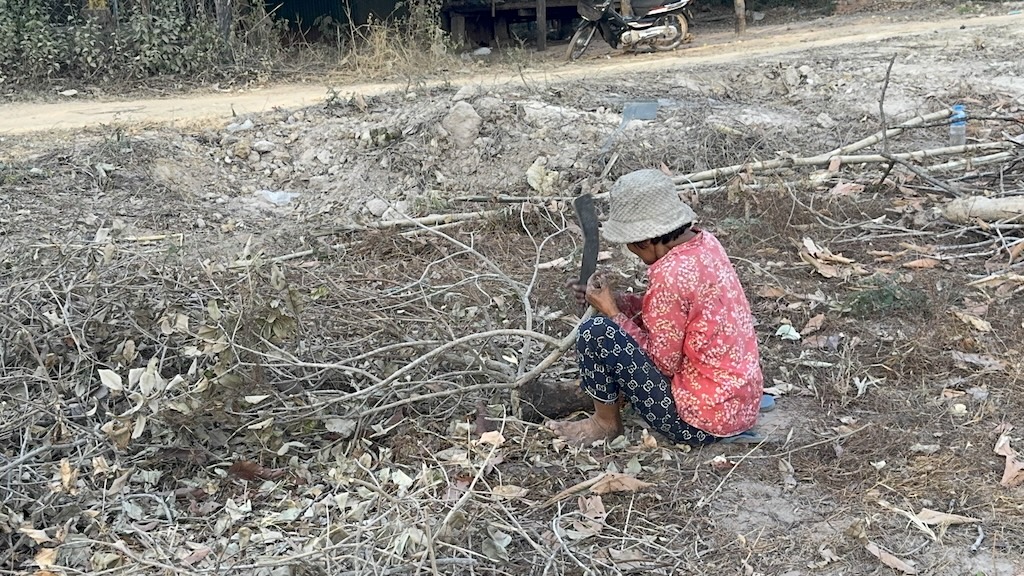
Instead of burning the cleared brush, permission was given for local women to gather the smaller wood for cooking fuel. What would have gone up in smoke became something useful. Something sustaining.
This was no charity event. Just access to what laid on the ground as trees were uprooted and cut up.
And that mattered.
Gleaning in Scriptures was never about handouts. It was about dignity. It allowed people to work, to gather, to provide for their households with their own hands.
Today, the field looks different. It is not grain waving in the wind, It is not rice growing in the open field, It is brush and fallen limbs. Yet the principle is the same; what we consider excess may be someone else’s provision. In the evenings now, one can imagine that somewhere smoke rises not from burn piles, but from cook fires in village homes., here and there. Yes, It is a small thing.
But often the Kingdom of God is seen most clearly in small things — in stewardship, in thoughtfulness, in refusing to waste what could bless another. The field was cleared. But perhaps something else was cultivated.
“As each has received a gift, use it to serve one another, as good stewards of God’s varied grace.’ 1 Peter 4:10.